Sustainable livelihood training
Livelihood and skill development training for SHG women in Tripura.
Hands-on programmes for TRLM, DMMUs and BMMUs that end with finished, packaged products — not just certificates. Farm and non-farm trades, delivered at the block, in the local language.
Overview
Training that leads to income
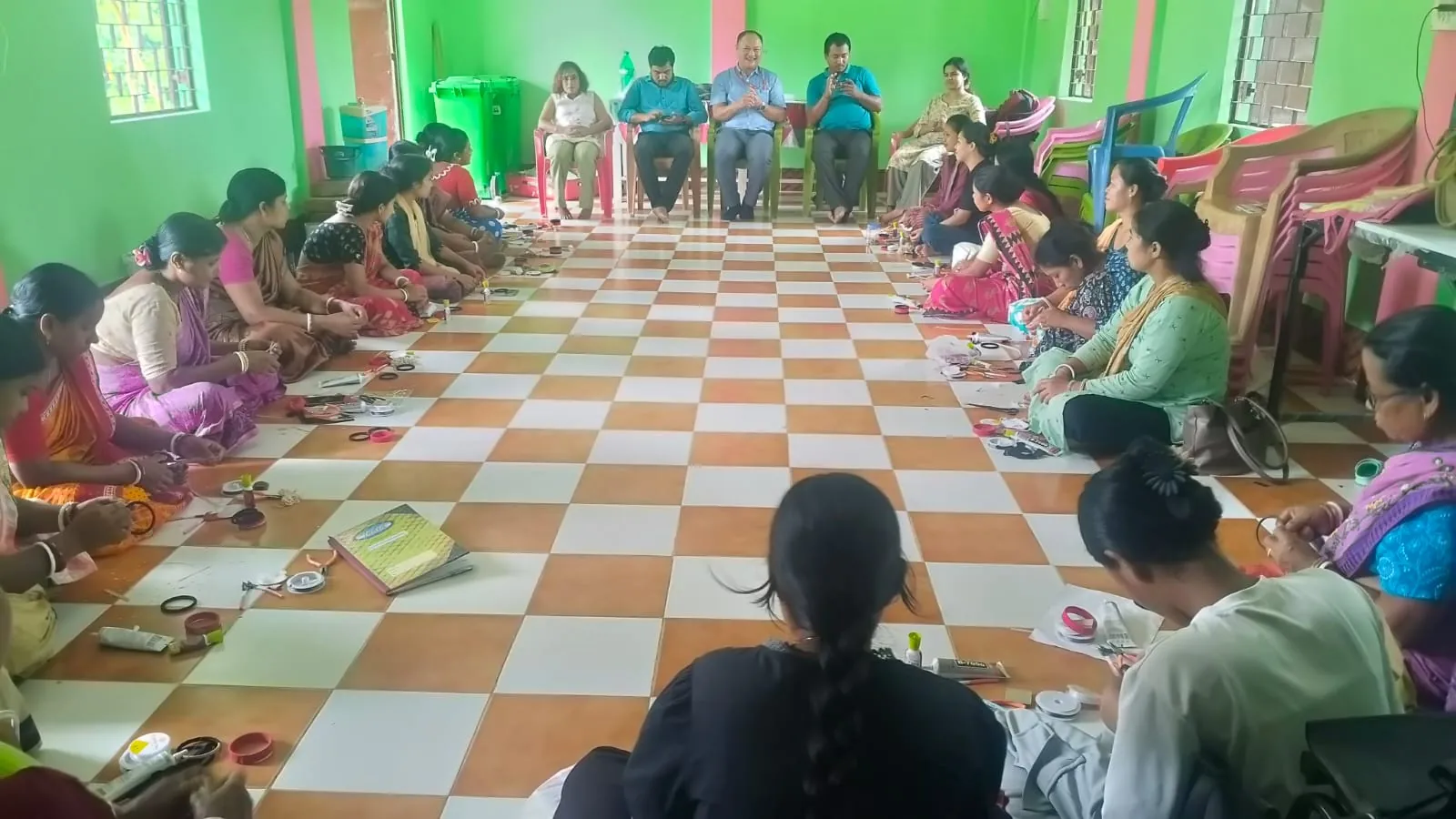
We design and conduct hands-on training programmes in farm and non-farm trades that equip SHG women with skills they can earn from immediately. Each module is tailored to local raw material and real market demand, so participants can start producing at home or launch a group enterprise as soon as the course ends.
Our programmes run from 7 to 60 days depending on the trade. Sessions are held at the block or at a venue the BMMU chooses, and every batch produces stock during training that is costed, priced and packed for sale.
In detail
Trades we train in
Bamboo and fusion jewellery
Earrings, necklaces and bangles combining Tripura bamboo with beads and metal findings. Our most requested trade, delivered in three districts.
Water hyacinth craft
Advanced 30 to 60-day programmes: harvest, dry, process and weave the weed into bags, baskets, mats, frames and pen stands.
Upcycled décor and gift boxes
Discarded bottles, cardboard and jute turned into bottle art, premium gift boxes and festive décor.
Food processing
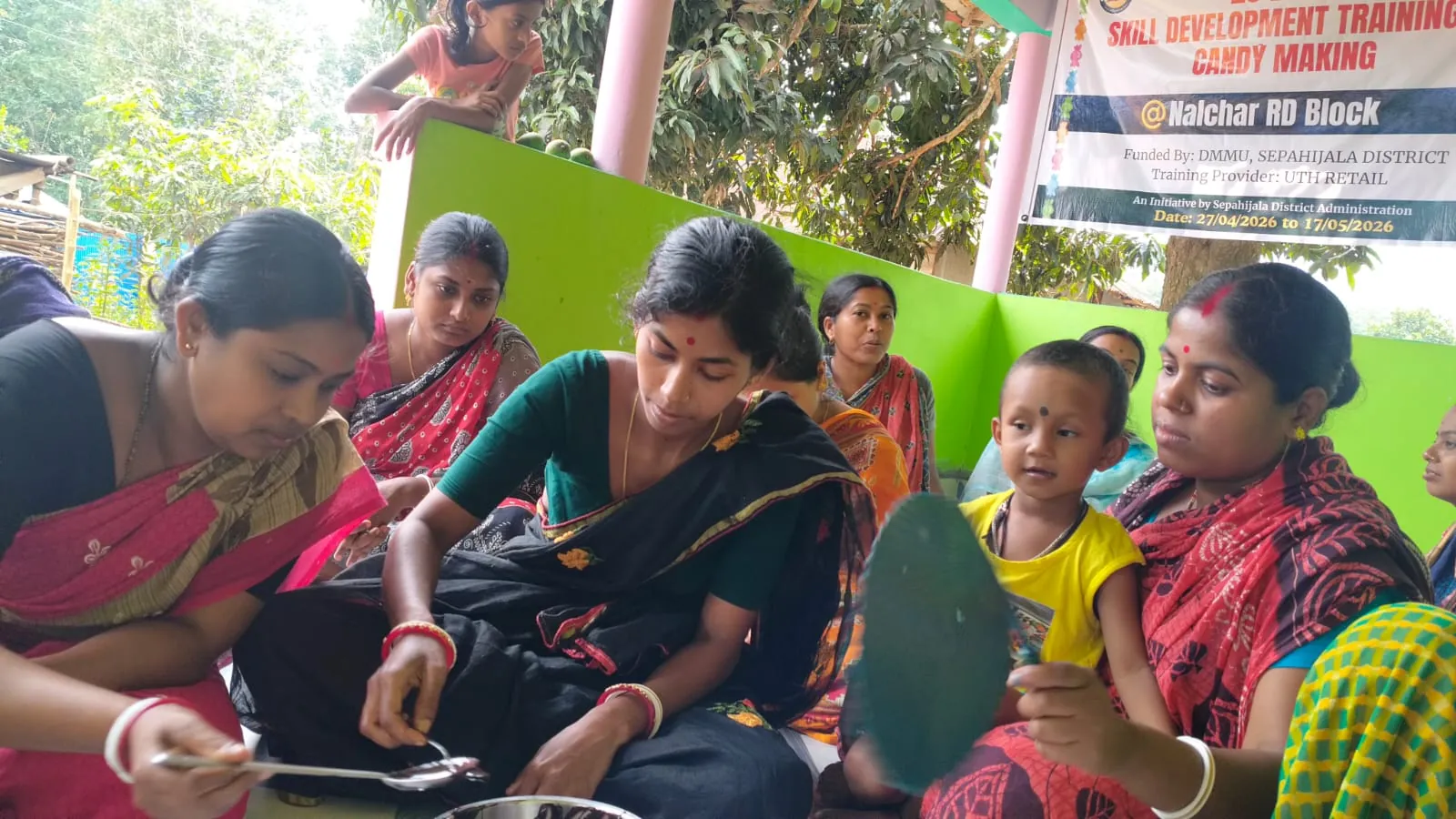
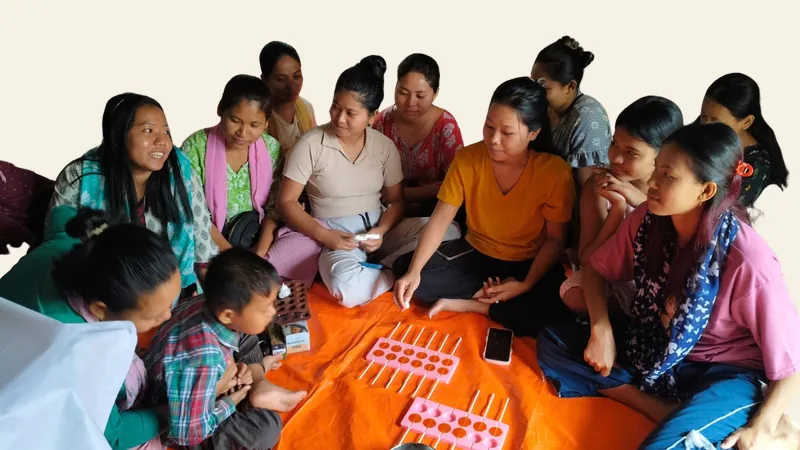
Preservative-free candy and cocoa chocolate, pickles, makhana value addition and dry-fish processing, with hygienic practice and shelf life.
Candles and cow-dung products
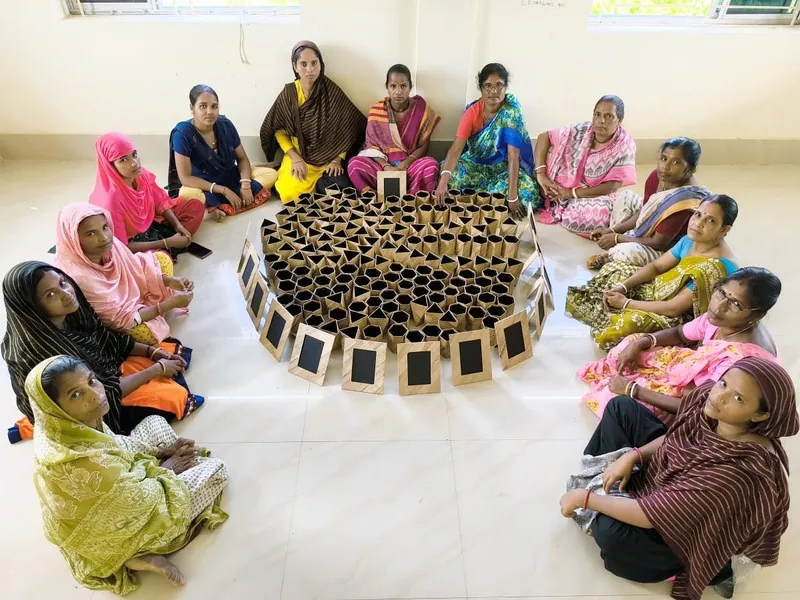
Aromatic and decorative candles; sambrani dhoop cups, diyas and dhoop cones.
Textiles and printing
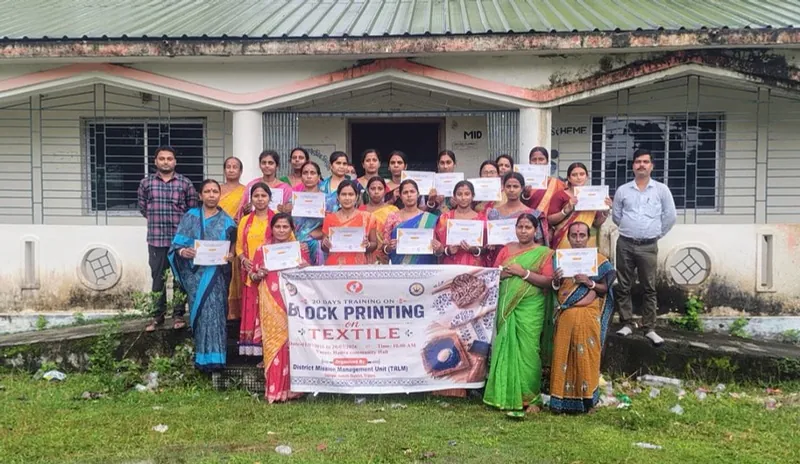
Block printing on sarees, kurtis, stoles and home linen; silk-screen printing on jute bags and pouches.
Banana fibre and terracotta
Banana fibre handbags and fabric, and terracotta and clay crafts.
Farm and organic livelihoods
Mushroom cultivation, high-yield organic vegetables, vermicompost, organic fertilizer and botanical pesticides.
Process
How a programme runs
Trade selection
We study local material, existing SHG skills and demand, then recommend a trade that is not already crowded.
Proposal in your format
A short, clear proposal or DPR in the TRLM, DMMU or BMMU format, with modules and requirements.
Hands-on training
Practising artisan trainers, a starter kit for every woman, and batch production from the first week.
Package, certify, link
Packaging and labelling, assessment and certificates, documentation for the Mission, and a route to buyers.
Highlights
What every UTH programme includes
- Market-led trade selection
- Trainers who make and sell the product for a living
- Tools and starter kit for every participant
- Costing, pricing and quality standards
- Packaging and branding built in
- Assessment and course completion certificates
- Attendance, photographs and completion reports in TRLM’s format
Frequently asked questions
Which districts of Tripura do you train in?
We have delivered programmes in Sepahijala, Dhalai, Gomati and South Tripura, and we take up work in every district of Tripura, including West Tripura, Khowai, Unakoti and North Tripura.
How many women can be trained in one batch?
Most batches have 20 to 30 SHG women. Larger programmes run several batches in parallel across blocks.
In which language is the training conducted?
Mainly in Bengali, with Kokborok support where needed. Printed material is kept simple and visual.
Do participants get certificates?
Yes. Every participant is assessed and receives a course completion certificate.
Plan a training programme for your block.
Share the block, the number of women and the trade you have in mind. We will propose a programme and a schedule.